Can anyone make kombucha? A beginner guide
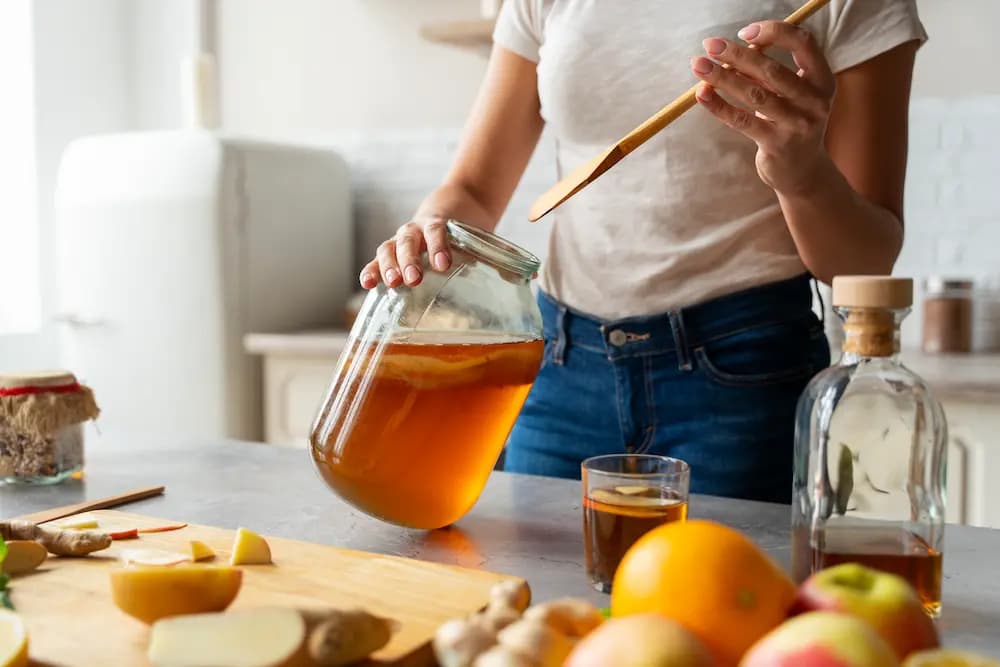
- Is kombucha making for everyone?
- Equipment and ingredients you need
- Most common beginner mistakes
- Tips for making kombucha successfully
Is kombucha making for everyone?
For most people, making kombucha is not difficult, but it does require attention and basic hygiene. You do not need to be an experienced fermenter, but you do need to respect a few key rules.
Adults and younger beginners can make kombucha successfully with a bit of precision, patience and willingness to follow the process instead of rushing it.
Equipment and ingredients you need
One of the best parts of homemade kombucha is that you do not need complicated equipment. The essentials are simple and easy to get.
- A glass jar of roughly 1 to 6 liters
- A cotton cloth or cover
- A rubber band to secure the cover
- Black or green tea
- Sugar
- Filtered or good-quality water
- A SCOBY starter culture with starter liquid
Without a starter culture there is no real homemade kombucha. The SCOBY and starter liquid are not optional extras, they are the foundation of fermentation. 🌱
If you want a detailed first-batch walkthrough, start with our basic preparation guide.
If you want to turn the base into stronger flavors and more carbonation, the next step is second fermentation.
Most common beginner mistakes
Beginners most often go wrong by using metal containers, sealing the jar too tightly, placing the batch in direct sunlight or choosing flavored teas that are a poor fit for SCOBY health.
Tips for making kombucha successfully
Successful kombucha depends more on consistency than on improvisation. Stable conditions usually create more predictable results than constantly changing the process.
Temperature and timing
For most home batches, a good range is around 22°C to 28°C and fermentation often takes about 7 to 10 days. The best signal is still the taste and progress of the batch itself.
Every jar behaves a little differently. Patience and keeping notes usually produce better results than guesswork. 🔬
If you want to gather everything for your first batch in one place, explore our starter cultures and brewing essentials.