Is brown color in kombucha normal? Signs of healthy kombucha
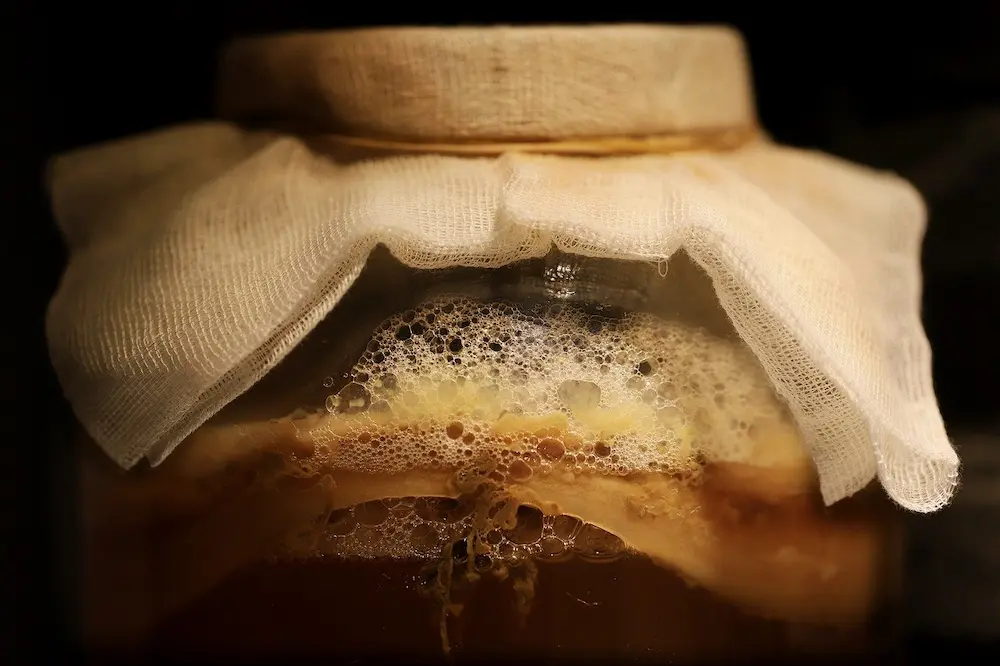
- What are the brown strings in kombucha?
- Why do these strings appear?
- Are the strings safe?
- How to recognize healthy kombucha
- Common questions about kombucha appearance
Brown color in kombucha is usually normal and often depends on the tea, the age of the culture and the natural course of fermentation. As long as there is no foul smell, mold or strange bright contamination, color changes are generally expected.
The SCOBY also changes over time. Older cultures naturally develop darker spots and marks, and that alone does not mean the batch has gone bad.
What are the brown strings in kombucha?
The brown strings floating in kombucha are usually yeast strands or clumps. They are a normal part of fermentation and show up when the culture is actively processing sugar.
In practice, the strings usually mean fermentation is active, not that something has gone wrong. 😄
Why do these strings appear?
During fermentation, yeasts and bacteria work together continuously. Yeast often leaves visible traces, especially when the culture is active and new layers are forming in the jar or bottle.
The amount of stringy yeast can vary from batch to batch. More or less of it does not automatically mean better or worse, only that fermentation behaved differently.
Are the strings safe?
In most cases, yes. These traces are part of normal fermentation and are not a problem for drinking if there are no signs of spoilage or mold.How to recognize healthy kombucha
If you want a quick check, focus on a few simple signs of a healthy drink and healthy culture:
- A lightly tart smell without mold
- Colors ranging from beige to brown depending on the tea
- Clear or slightly cloudy liquid
- No green or black moldy spots
Common questions about kombucha appearance
If the strings or new culture bits bother you in the glass, feel free to strain the kombucha before drinking. That is a texture preference, not a safety issue.
If you are still unsure whether your kombucha is healthy, do not guess. Check smell, surface appearance and any signs of mold, and when in doubt it is safer not to drink that batch.