Bubbles in kombucha: is that normal?
- Why do bubbles appear?
- Types of bubbles in kombucha
- When are bubbles a good sign?
- How temperature and airflow affect bubbles
- Common questions about bubbles
Why do bubbles appear?
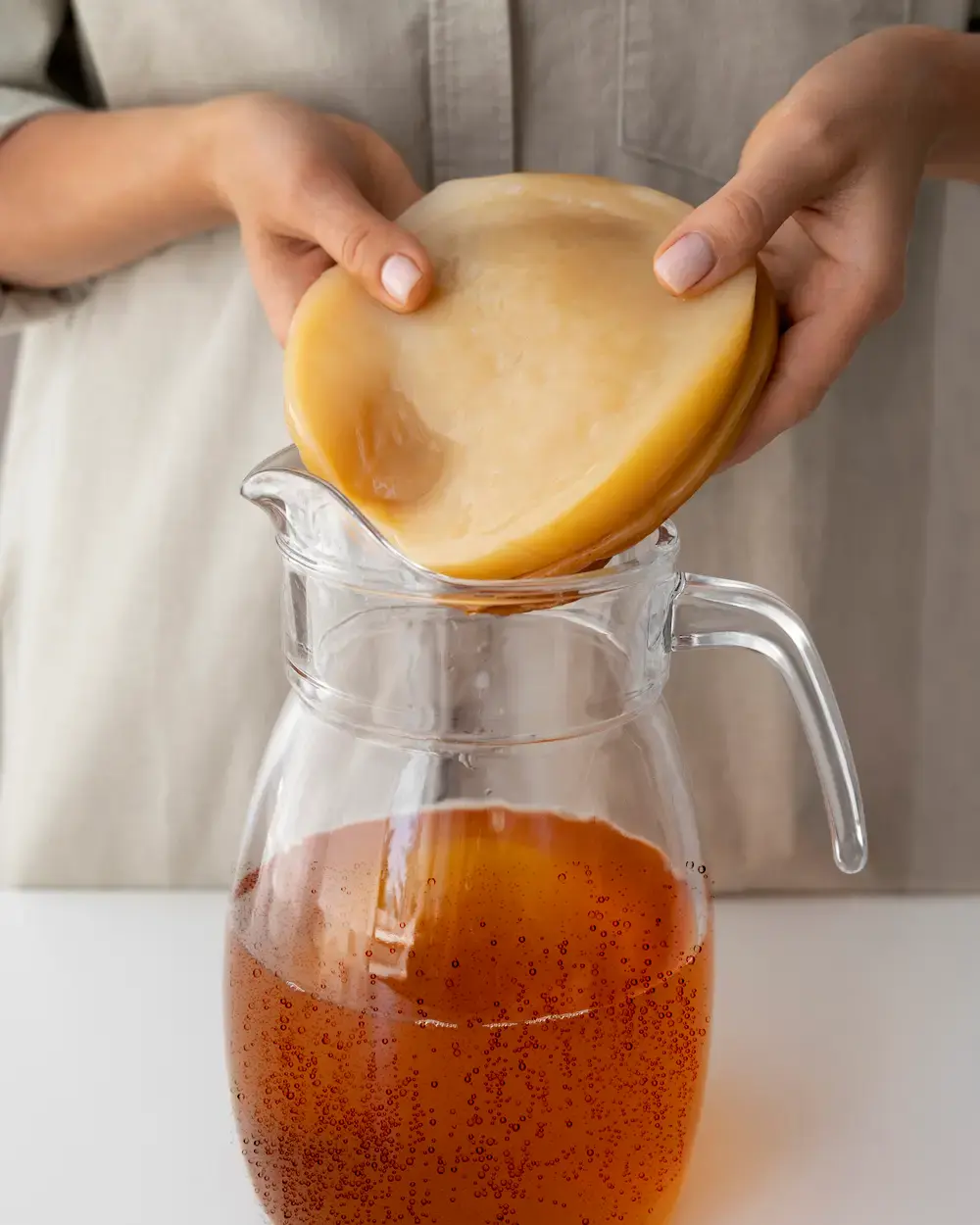
Bubbles in kombucha appear as a natural result of fermentation. Yeasts and bacteria work together to break down sugar, and one of the visible outcomes is carbon dioxide production.
In practice, bubbles are often visible proof that the microorganisms are doing their job and the culture is active. 😊
The number of bubbles can also be influenced by temperature, airflow, the fermentation stage and the exact moment when you check the jar or bottle.
Types of bubbles in kombucha
Not all bubbles look the same, and that is completely normal. In practice a few patterns are especially common.
- Small fine bubbles as a sign of active fermentation
- Larger surface bubbles, often after a temperature change
- Bubbles trapped under the SCOBY layer because of built-up CO2
When are bubbles a good sign?
They are usually a good sign when they appear gradually during fermentation and the kombucha still smells and tastes normal.If you want stronger natural carbonation, it helps to notice bubbles before second fermentation because they show the culture is already active.
How temperature and airflow affect bubbles
Temperature and airflow strongly influence fermentation speed. In moderately warm conditions kombucha often shows more activity, and that usually means more visible bubbles too.
A sudden location or temperature change can temporarily increase the number of bubbles. That does not automatically mean something is wrong, only that fermentation conditions changed.
Common questions about bubbles
Can too many bubbles be a bad sign?
Not necessarily. If the kombucha still smells and tastes pleasant, a higher bubble count usually just means stronger fermentation activity.
What if there are no bubbles?
That is not automatically bad either. Some batches produce fewer visible bubbles while fermentation still progresses normally if the flavor develops and the SCOBY looks healthy.
The best approach is to look at the full picture: taste, smell, culture appearance and overall fermentation progress, not just one detail. 🌱
If you want more reliable fermentation or gear for brewing kombucha at home, explore our product range.